-
Tomas Rosen (Stony Brook University)11/12/2018, 15:30
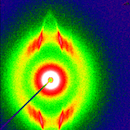
Nature has a remarkable way of creating complex hierarchical nanostructures of cellulose nanofibrils (CNF) into various forms of trees and plants. Depending on local environment, evolution has tailored these structures over millions of years to enhance the particular species’ chances of survival. Learning from nature, we explore the possibility to tailor the properties of cellulose materials...
Go to contribution page -
Bruno Silva (INL - International Iberian Nanotechnology Laboratory)11/12/2018, 15:50
The field of microfluidics offers attractive possibilities to perform novel experiments that are difficult to execute using conventional methods [1]. First, the flow of liquids under submillimeter confinement leads to predictable and controllable flow profiles, along with well-defined chemical gradients and stress fields that can be used for controlled mixing and actuation on the micro and...
Go to contribution page -
Prof. Wes Burghardt (Chemical & Biological Engineering, Northwestern University, USA)
X-ray scattering techniques are well-suited for in situ investigations of the structural dynamics of complex fluids. The characteristic length scales of relevant microscopic structural features frequently fall into the range of 1 to 100 nm suitable for x-ray methods, while high brilliance synchrotron sources and continually evolving detector technologies provide opportunities to resolve...
Go to contribution page -
Choose timezone
Your profile timezone: