Choose timezone
Your profile timezone:
Join us in Lund for a lunch-to-lunch workshop from Monday (10th) to Wednesday (12th) of December!
The Lund Institute of Advanced Neutron and X-ray Science (LINXS) is organizing its first thematic workshop titled Scattering and Dynamics of Flowing Soft Material. The goal is to bring together leading experts in the field of flows of soft materials, with a particular focus on neutrons and X-rays, but also complementary techniques including NMR, confocal microscopy, theory and computer modeling.
- Polymers
- Associated systems
- Colloids
New instruments and methods can be immersed within the above topics. Each session will have 3-4 invited speakers and the same number of contributed talks. There will also be a poster session to encourage student participation. All PhD students should submit an abstract.
Dr. Qian Huang - Chemical Engineering, Technical University of Denmark
Dr. Carlos Lopez-Barron - ExxonMobil Chemical Company, USA
Prof. Bamin Khomami - Chemical & Biomolecular Engineering, The University of Tennessee, USA
Prof. Wes Burghardt - Chemical & Biological Engineering, Northwestern University, USA
Dr. Katie Weigandt - National Institute of Science and Technology
Center for Neutron Research, USA
Prof. Joao Cabral - Dept. of Chemical Engineering, Imperial College London, UK
Dr. Guillaume Ovarlez - CNRS, University of Bordeaux, France
Prof. Itai Cohen - Physics, Cornell University, USA
Dr. Romain Mari - CNRS, University Grenoble-Alpes, France
Prof. Daniel Read - Department of Applied Mathematics, University of Leeds, UK
Prof. George Petekidis - Materials science & Technology, University of Crete, Greece
Soft matter is a convenient term encompassing a wide range of materials, such as polymers, surfactants, colloids, emulsions, liquid crystals and various biological materials. These diverse materials may exhibit time-dependent structures under transient or out-of-equilibrium conditions resulting from for example self-assembly processes, phase transitions or in response to external fields, such as flow. These time-dependent or flow-dependent structures may in turn influence their viscoelastic behavior or vice versa and be triggered by instabilities. Shear and extensional flow fields are ubiquitous in the manufacture, processing and use of these everyday materials and yet, typical experimental techniques, like small angle scattering, only provide information about the quiescent or time-averaged state. The combination of new time- and spatial-resolved experimental methods combined with computational and theoretical approaches is required to determine the complex nonlinear and time-varying response to deformations which is often also non-homogeneous. Thus, the study of flowing soft matter presents new opportunities and challenges of great scientific and technological interest carving out the path for new discoveries and innovations of flowing soft materials.
Prof. Ole Hassager, Dept. of Chemical and Biochemical Engineering, Technical University of Denmark
Prof. Kell Mortensen, Niels Bohr Institute, Copenhagen University
Prof. Peter Olmstedt, Institute for Soft Matter Synthesis and Metrology, Georgetown University
Dr. Ann Terry, MAX IV, Lund University
Dr. Martin Trulsson, Theoretical Chemistry, Lund University
A key element to understand the rheological behavior of suspensions is their microstructure: the spatial distribution of particles depends on flow history, which has an impact on the suspension macroscopic properties. This appeals for the development of experimental tools allowing for the 3D imaging of particles in viscosimetric flows.
At a macroscopic scale, concentrated suspensions often display concentration inhomogeneities, due to shear-induced migration. These inhomogeneities can lead to the formation of jammed regions, which have a strong impact on the measured behavior. It is crucial to describe this phenomenon near the jamming transition and in shear-thickening fluids. It is thus necessary to develop new tools to get time- and spatially-resolved concentration fields in flowing suspensions.
In this talk, we present recent developments to tackle these issues with the help of X-ray Imaging.
We first present a technique to image the microstructure of suspensions of non-Brownian particles in 3D, using X-ray computed tomography and sub-voxel identification of particle centers. We illustrate its interest on a few examples. We show that one can get an isotropic microstructure after mixing. Under shear, the microstructure becomes anisotropic in the shear plane, whereas it is isotropic in the 2 other planes. While for Newtonian suspensions the anisotropy is independent on the shear rate, we show that for a yield-stress suspension it depends on it; this implies a shear-dependent behavior of the suspension. Finally, we evidence particle alignment along both solid surfaces and free interfaces.
We then present a technique to get time-resolved 2D concentration fields in a rheometric flow, thanks to 2D X-ray radiography. We illustrate its interest for shear-thickening fluids. We show that most suspensions display strong concentration inhomogeneities at the onset of Discontinuous Shear thickening (DST), which poses the question of the intrinsic (local) behavior of DST suspensions and might lead to revisit the interpretation of this behavior.
We have studied the non-equilibrium dynamics of self-assembled magnetic peanut-shaped colloids in the presence of a magnetic field. The micrometre‐sized particles align in a direction perpendicular to the applied external magnetic field, and assemble into chains along the field direction. The anisotropic dynamics of these particles is investigated using multispeckle ultrasmall‐angle X‐ray photon correlation spectroscopy (USA‐XPCS). Perpendicular to the applied field, which is also the direction of gravity, a sedimentation induced flow develops. XPCS allows us to investigate the resulting anisotropic dynamics, and in particular to decouple contributions from the sedimentation induced flow, thermal diffusion of the assembled chains and individual particles, and the internal collective dynamics of the assembled mesoscopic structures over a large range of length scales. Our experiments demonstrate the power of XPCS to investigate complex dynamic processes that arise due to a combination of diffusive and flow-induced processes. Given the very small scattering volume probed in an XPCS experiments, this opens up interesting possibilities for investigation spatially heterogeneous dynamics in highly turbid media that cannot be probed with optical techniques.
Spatially resolved, X-ray diffraction with synchrotron radiation permits detailed maps of the alignment of crystalline colloidal particles to be deduced and compared with fluid mechanics calculations of the flow. The angular distribution of diffracted intensity from a given position in the pipe provides information about the orientation distribution of the particles. Orientational alignment in a dispersion of kaolinite particles has been investigated in several geometries. These include a uniform pipe, at bends as well as a flow pattern that combines both shear and elongational stress, namely flow at a jet created by a 2 mm diameter nozzle inserted in a 6 mm diameter pipe [1,2]. The alignment is quantified and presented in terms of order parameters. The orientation at different positions in a cylindrical pipe can be correlated with the Peclet number at different locations. The cone-shaped nozzle provides a jet of liquid giving a high degree of alignment of the particles that is uniform along lines across the conical section and constant in the small straight-sided region at the exit of the nozzle. The vortex motion that arises from the flow with a modest Reynolds number could be determined as well as the tendency for some particles to align with their large faces perpendicular to the overall flow direction at the flat surface of the nozzle outlet. Older studies will related to new challenges related to 3D-printing polymer composites.
The microscopic structure and dynamics in colloidal systems at different length-scales, from single to multiple particle level, are probed under shear by a variety of scattering and direct imaging techniques. We present different studies of hard and soft particle glasses and attractive gels of spherical and rod-like colloids, where we link the mechanical response with the underlying particle dynamics and structure.
Yielding of colloidal glasses under large amplitude oscillatory shear was probed by simultaneous rheometry and light scattering with the LS-echo technique. We studied a range of colloidal systems with varying interparticle interactions from hard and soft sphere glasses to attractive glasses and gels. LS-echo probes reversible and irreversible rearrangements that are linked with rheological yielding of the system.
Secondly we discuss the mechanisms responsible for a variety of shear induced structures in attractive colloidal gels and their relation to linear and nonlinear rheology. We use a combination of rheological experiments and rheo-confocal measurements with computer simulations. In such thixotropic systems steady and oscillatory shear can be used as an external field to tune the structure and mechanical properties of colloidal gels and drive them in metastable states, not easily accessible at quiescent conditions.
Finally, we present shear induced structural formations gels of attractive rod-like colloids. More specifically we discuss the rheological response and flow induced clustering of silica rods in a density matching solvent, where electrostatic repulsions are screened via the addition of CsCl. A variety of simultaneous imaging techniques and rheometry reveals structural changes at different length-scales. Shear induced log-rolling clusters in the vorticity direction are formed driven by an interplay of hydrodynamic interactions, confinement and a balance of shear and attractive forces. Structural formation is discussed as a function of volume fraction, shear rate, gap size, tool geometry as well as shear history.
Discontinuous shear thickening of dense suspensions is a phenomenon in which, at a specific shear rate, the viscosity increases discontinuously often by orders of magnitude. Recent modeling of the phenomenon suggests that the viscosity jump in rate-controlled rheometry corresponds to an underlying S-shaped flow curve in stress-controlled conditions. This nonmonotonic rheology was observed in simulations with modest particle numbers, showing a range of shear stresses for which the shear rate is a decreasing function of the shear stress. In general, however, one expects that for large enough systems a decreasing flow curve leads to a mechanical linear instability of the uniform flow and the appearance of banding or rheo-chaos in the nonlinear regime. The exact mode of instability is nonetheless quite difficult to predict in absence of a proper tensorial constitutive model. In this talk I will show particle-based numerical simulations of thickening suspensions exhibiting an instability along the vorticity direction and subsequent "traveling" vorticity bands. Interestingly, because the mechanical description of the vorticity direction can be decoupled from the flow and gradient directions, a one-dimensional (scalar) constitutive model is enough to capture most of the features observed in the simulations. This model also gives hints as to the origin of the unsteady rheological response observed in experiments performed in similar conditions.
Self-assembly of soft matter, such as droplets or colloids, has become a promising scheme to engineer novel materials, model living matter, and explore non-equilibrium statistical mechanics. In this talk, we present detailed numerical simulations of few non-Brownian droplets in various flow conditions, specifically, focusing on their self-assembly within a short distance in a three-dimensional (3D) microfluidic channel, cf. [Shen et al., Adv. Sci., 2016, 3(6):1600012]. Contrary to quasi two-dimensional (q2D) systems, where dipolar interaction is the key mechanism for droplet rearrangement, droplets in 3D confinement produce much less disturbance to the underlying flow, thus experiencing weaker dipolar interactions. Using confined simple shear and Poiseuille flows as reference flows, we show that the droplet dynamics is mostly affected by the shear-induced cross-stream migration, which favors chain structures if the droplets are under an attractive depletion force. For more compact clusters, such as three droplets in a triangular shape, our results suggest that a non-uniform cross-sectional inflow profile is further required. Overall, the accelerated self-assembly of a small-size droplet cluster results from the combined effects of strong depletion forces, shear alignments, and fine-tuned inflow conditions. The deterministic nature of the flow-assisted self-assembly implies large throughputs, though calibration of all effects is likely difficult at the same time.
We performed start-up experiments with concentrated hard-sphere suspensions around the glass transition. Rheo-confocal experiments were carried out to link the macroscopic rheological response to the single-particle structure and dynamics. During the start-up of shear, suspensions of large particles (diameter ≈1.6μm) showed a transient non-linear velocity, resembling shear bands without a clear boundary. We performed a quantitative analysis to elucidate the correlation between the shear profile and microscopic properties, such as the local velocity, shear rate and volume fraction. They show a strong dependence on the position in the gap and hence indicate a significant heterogeneity. Based on the microscopic properties we propose a mechanism that leads to the transient non-linear shear profiles.
“Why should one wish to make measurements with ever increasing precision? Because the whole history of physics proves that a new discovery is likely to be found lurking in the next decimal place.” (Floyd K. Richtmyer, 1931)
Since the days of Perrin, microscopy methods have played an important role in the study of colloidal suspensions. Along with the continued development of new imaging techniques, colloid scientists have also implemented a sophisticated range of computational analyses. These analysis techniques are often the unsung heroes that hold the promise of unlocking scientific mysteries at the next decimal place of colloid science. They now enable precision measurements of particle location and size with nm precision as well as measurements of local stresses and forces. Here, I spotlight exciting recent advances we have made focusing on the analysis of simple confocal microscope images of dense colloidal suspensions. I will then describe our plans for using these tools to unravel scientific mysteries ranging from yielding in glasses, training of colloidal gels, and the stress networks governing shear thickening flows.
Low-intensity ultrasound is widely used to probe and image biological tissues.Yet, yltrasound can also be used at high power to destroy nodules or burn tumors. We try to transpose and understand the latter effects in soft matter. We first show that high-power ultrasound softens colloidal gels. Upon applying ultrasound at 45kHz for a few tens of seconds on various gels in a rheometer, we find that the elastic modulus of the gel is weakened and that its fluidization is fastened. As ultrasound is turned off, the gel recovers its elasticity. To investigate this process at the micron scale, we then probe the gel under ultrasound with small-angle X-ray scattering (ESRF, ID02). These experiments show a strong effect of the ultrasound excitation on the SAXS spectra both on a colloidal gel at rest and under flow.
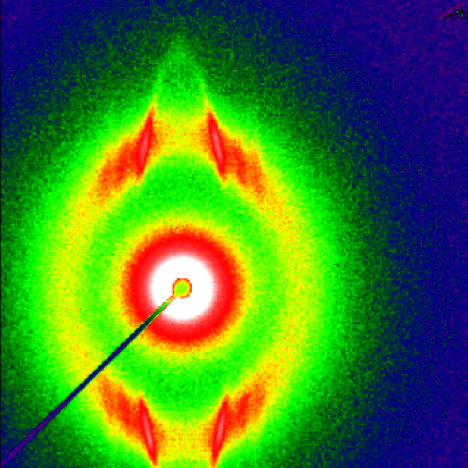
Molecular bottlebrushes are branched polymers with very high graft density which results in very rigid backbones. This conformation provides unique rheological properties compared to linear polymer melts. For instance, their very large entanglement molecular weight (Me) results in very low elastic modulus, which could be used to produce super-soft elastomers [Pakula et al., Polymer 47, 7198 (2006)]. Despite the growing interest in bottlebrush polymers, very few studies have been devoted to their linear viscoelastic response, whereas, to our knowledge, no study has been reported on their extensional rheology or their response to cold-drawing. We synthesized a series of ultra-high molecular weight (UHMW) a-olefin molecular bottlebrushes by organometallic coordinative insertion polymerization of 1-alkenes with lengths ranging from 8 to 18 carbons. The molecular weight of these polymers are in the order of a few million g/mol, which allows accurate measurement of their rubbery plateau modulus (GN0) and their Me values. The latter is an increasing function of the side chain length (Nsc) and takes values ranging from 25 kg/mol (for poly(1-octene)) to 115 kg/mol (for poly(1-octadecene)). Therefore, our bottlebrush polymers are highly-entangled and have sufficient melt strength to perform extensional rheology measurements using a commercial Sentmant extensional rheometer (SER). Bottlebrush chain alignment was measured using a novel method that combines the use of a SER with time-resolved small-angle neutron scattering (SANS) measurements [López-Barrón et al., J Rheol. 61, 697 (2017)]. The latter uses state of the art methods of neutron time stamping in the SANS detector and deconvolution protocols that yields scattering data with time resolutions of the order of seconds [López-Barrón et al., Phys. Rev. Lett. 108, 258301; Calabrese et al., Soft Matter 12, 2301 (2016)]. Those measurements were used to confirm the direct correlation between extensional stress and bottlebrush chain alignment. Complementary, in situ wide- and small-angle X-ray scattering measurements reveal that chain alignment is concomitant of self-assembly of the bottlebrush molecules into hexagonal packed cylinder (HEX) phases induced by uniaxial extension. This work reports the first direct evidence of strain-induced alignment and packing of molecular bottlebrushes and their relation with the macroscopic rheological and mechanical responses.
Nonlinear deformations are a key ingredient for applications of rheologically complex materials,
e.g. for the processing of polymeric materials stretching, orientation, dissentaglement of
polymer chains occurs, with the interactions between flow field and constituents dictating the
overall flow dynamics and subsequent material properties/performance. In this framework, we
focus mainly on nano-filled suspensions and polymer composites in oscillatory and steady
shear for a various nanofillers, e.g. graphene, nanocelulose etc.. Of particular importance is the
analysis of the oscillatory shear stress output signal analysis in the framework of Fourier-
Transform (FT) analysis and Tchebyshev polynomial decomposition. The effects of orientation
dynamics and morphological fingerprinting are highlighted, with rheological percolation
thresholds determined with superior sensitivity using nonlinear material parameters and
nonlinear features hinting at the filler morphology of percolated network dynamic response.
The mechanical properties of polymer melts under deformation are well described by the tube model developed in the 1970s by de Gennes and Doi and Edwards. In the model, the restricted motion of a chain due to its neighbors is modeled as if the chain ia confined to a tube. However, the validity of the tube model for rapid deformations compared to the molecular relaxation was recently questioned [1]. They proposed a new analysis method for anisotropic 2D small angle (neutron) scattering, SANS, data for uniaxially extended polymer melts expanding the data in spherical harmonics to ease the separation of the isotropic and anisotropic contributions. Using this method, they looked for the signature of chain retraction, see below, during relaxation after deformation which is a cornerstone of the tube model. The signature was absent in their data which lead them to conclude that chain retraction either does not occur or that it is shielded by some other non-linear effect not yet included in the model. However, we employ the same analysis also on SANS data for a polystyrene melt of about a factor of five lower molar mass stretched more than a factor of ten more, and we do see the proposed signature in the harmonics: The minimum in the expansion coefficient of the leading anisotropic contribution to the scattering pattern shifts towards larger q as the relaxation times approaches the Rouse time, τR. We therefore conclude that the relaxation of the molecular stretching and orientation are decoupled, or in other words that the chain retracts, which supports the tube model.
Chain retraction arises during relaxation if the deformation is fast enough to not only orient the chains but also stretch them. The hypothesis of the tube model is that the relaxation of the stretching of the molecule happens on a fast time scale, τR, through a Rouse-like process whereas the relaxation of the orientation happens on a much slower timescale through repetition. That these timescales are well separated causes the molecule to shrink in all dimensions for t∼<τR after deformation preserving its shape. Only for t>τR does it relax back to its equilibrium shape.
Whilst there has been much success in modeling the linear and nonlinear rheology of monodisperse entangled linear polymers, progress in the constitutive modeling of polymeric materials continues to lag behind the needs of industry. Industrially sourced polymers are typically polydisperse (comprising a broad distribution of molecular weights), making their rheology more suitable for processing but also more difficult to predict. To date, there are no molecular-based constitutive models that are practically suitable for describing industrially relevant polymers in industrially relevant flows. We extend but strongly simplify the Read et al. model [Read et al., J.Rheol. 56, 823-873 (2012)], which is able to predict the linear and nonlinear rheology of bidisperse blends but is prohibitively complex for industrial use. We propose a pair of simplified tube models for polydisperse melts of entangled linear polymers that combine the success of the double reptation approximation [des Cloizeaux, Europhys. Lett. 5, 437-442 (1988)] in the linear regime with the success of the Rolie-Poly constitutive equation [Likhtman et al., J. Non-Newton. Fluid Mech.114, 1-12 (2003)] in the nonlinear regime. For binary blends, We show that these models naturally identify the effects from couplings between constraint release and chain retraction (i.e. the so-called "enhanced stretch relaxation time"). We generalize to a multi-component (polydisperse) model, based on the same underlying principles. Both of our models are in qualitative, and largely quantitative, agreement with experimental data for bidisperse and polydisperse melts of entangled linear polymers.
Whereas the collective response to external shear of soft colloids is frequently investigated [1,2], observations of shear-induced effects on the single particle level are still scarce. Therefore we investigated this intraparticle “brush deformation” of polybutadiene (PB) star and linear polymers by rheology and Rheo-SANS [3, 4]. Excellent agreement between experiment and theory with respect to the amount of shear deformation and shear thinning for star polymers with varying functionality, f, was found. Surprisingly, two decay modes (“fast” and “slow” modes) were observed in flow curves of star polymers, indicating a hierarchical deformation of the polymeric corona. In binary mixtures it was observed that fast and slow modes originating from the star polymers were strongly affected by the addition of linear homopolymer, which influenced the shear induced ‘brush deformation’ of star polymers. We found macroscopic phase separation upon increasing concentrations of linear polymer and shear-induced microphase separation (coil-to-globule transition) by means of Rheo-SANS experiments.
Quantitative understanding of the influence of environmental variables on the dynamic evolution of microstructure in polymeric fluids plays a central role in soft matter physics as well as the processing of a wide variety of soft materials. Atomistic simulation via non-equilibrium molecular dynamics (NEMD) offer a viable alternative to experiment wherein the dynamics of individual macromolecules can be tracked independently, thus allowing for relevant calculations of their single-chain configurational properties as well as the individual chain contributions to bulk-average properties. Specifically, large scale NEMD simulation results of entangled polymeric fluids allow examination of the fundamental tenants of reputation/ tube based theories including calculation of essential variables such as the tube orientation tensor, tube stretch, and disengagement and Rouse times.
In this presentation, I will briefly review the progress made in fundamental understanding of non-equilibrium dynamics of polymeric melts as well as the remaining challenges in development of a unified approach for quantitative prediction of dynamics of this class of fluids in processing flows commonly used to produce structural and functional soft materials. Specifically, I will discuss, Non-Equilibrium Molecular Dynamics Simulations (NEMD) results of linear monodisperse entangled macromolecular melts in shear and extensional flows that depict existence of new phenomena that challenges the fundamental tenants of reputation/tube based theories and models used to describe fast flow of entangled polymeric fluids. In turn, the intricate connection between single chain dynamics and the macroscopic response of this class of fluids including the intriguing phenomena of shear banding and configurational microphase separation in planar extensional flows will be discussed.
Acknowledgments: Financial support was provided by the National Science Foundation under Grant No. CBET-1602890.Computational resources for this project were provided by allocation of advanced computational resources by the National Institute for Computational Sciences (NICS) and the Oak Ridge National Laboratory Joint Institute for Computational Sciences. This work also used the Extreme Science and Engineering Discovery Environment (XSEDE), which is supported by National Science Foundation grant number ACI-1548562/TG-CTS150054.
Extensional flow is a major type of deformation in many polymer processing operations such as blow molding and fiber spinning. Extensional rheology of polymer melts is highly sensitive to molecular architecture and conformation. In the past four decades, people have made a great effort to study the dynamics of polymer chains in extensional flow in order to predict the rheological behaviour by using constitutive equations based on molecular theories (e.g. the tube model). However, while producing pure extensional flow in a highly controlled manner (e.g. constant strain rate) is already a challenge, rheology measurements give indirect information of molecular conformation in terms of stress-strain responses only. Thus combining state-of-the-art extensional rheometry with scattering techniques provides a powerful tool to understand polymer dynamics.
In this work, we measure the extensional rheology of polystyrene (PS) melts using a filament stretching rheometer which is able to produce a well-defined extensional flow. We show that the rheological behaviour of PS melts with different molecular architectures (linear and star shaped) is identical in fast extensional flow, indicating the same molecular conformation. The hypothesis of the same molecular conformation is confirmed in small angle neutron scattering (SANS). We also measure a bi-disperse PS blend containing linear chains of two molecular weights, and a monodisperse PS melt containing the short linear chains only, in stress relaxation following a fast extensional flow. By combing rheological measurements with SANS measurements, we show that there are nematic effects and strain coupling between the short and long chains in the blend. Furthermore, we show that the chain stretch idea in the tube model can be critically tested through analysing the SANS data at different time in stress relaxation process.
Hydrogels built from DNA are an attractive class of materials, whose structure and mechanical properties can be tuned by the design of “physical” cross-links based on selective Watson-Crick base pairing [Pan, Soft Matter 12,5537 (2016)]. Even simple systems of entangled DNA helices can display complex mechanical response, such as shear banding [Boukany, Soft Matter 5,780 (2009)] and strain hardening [Orakdogen, Macromolecules 43, 1530 (2010)]; however, in discussing such intriguing features, it is often disregarded that long DNA strands also undergo a transition to Nematic (N) liquid crystalline phase at concentrations as low as few mg/ml [Merchant, Biophys.J. 73,3154 (1997)].
We investigate the correlation among phase behaviour, structure and rheological properties in DNA helices of thousands of base pairs. In a wide concentration range, the solutions are viscoelastic while also displaying a continuous transition from Isotropic to N, without detectable phase separation. These solutions exhibit very low degree of ordering at rest, but strong, transient birefringence when sheared.
We measure the mechanical and optical response to continuous, oscillatory and step deformations across the transition region. To this aim, we combine rheology to real-space measurement of shear-induced alignment in a microscope shear cell, or through polarized reflection directly on the rheometer [Mykhaylyk, J. Polym. Sci. B 54,2151 (2016)]. Furthermore, through rheo-SAXS experiments we gain access to the local degree of alignment and structure.
We find that both shear stress and birefringence relax with two different time scales, a slow decay related to spontaneous disentanglement and a faster one, which we interpret as the result of the frustrated phase separation and local heterogeneity of the system. Regions with larger N order are more easily aligned and fluidized than the isotropic, viscoelastic matrix in which they are embedded, resulting in a faster optical and mechanical relaxation.
Nature has a remarkable way of creating complex hierarchical nanostructures of cellulose nanofibrils (CNF) into various forms of trees and plants. Depending on local environment, evolution has tailored these structures over millions of years to enhance the particular species’ chances of survival. Learning from nature, we explore the possibility to tailor the properties of cellulose materials materials to suit our needs by hydrodynamically aligning the CNF and assembling them through controlled gelation and subsequent drying. The orientation distribution of CNF will depend on various parameters including flow properties such as deformation state (e.g. shear and extension) and flow rates as well as CNF properties such as fibril length distribution and concentration. In this work, we study the orientation of CNF and cellulose nanocrystals (CNC) in the shear layers of a channel flow using small angle X-ray scattering. The results are compared with simulations of dilute anisotropic Brownian particles. Furthermore, we demonstrate how polarized microscopy can be used to estimate the orientation distribution of these birefringent dispersions in the channel as well as determine their rotary diffusion rates. The results greatly enhance our understanding of CNF dynamics in flows, which in turn can lead to new strategies in controlling the structure of nanofibrous materials.
The field of microfluidics offers attractive possibilities to perform novel experiments that are difficult to execute using conventional methods [1]. First, the flow of liquids under submillimeter confinement leads to predictable and controllable flow profiles, along with well-defined chemical gradients and stress fields that can be used for controlled mixing and actuation on the micro and nanoscale. Secondly, intricate microfluidic device designs can be fabricated to perform complex tasks. Thirdly, microfluidic devices are usually compatible with in situ or integrated characterization methods that allow constant real-time monitoring of the processes occurring inside the microchannels.
In this work we will focus on the use and prospects of combining microfluidic devices with in situ small-angle X-ray scattering (SAXS) for soft matter research. In a first example, we use this manipulation ability to create well-defined flowing interfaces to study the interplay between shear-flow forces and the structure of nematic liquid crystals and surfactant monolayers [2]. In a second example, we study the structural evolution of a lamellar phase undergoing a transition to a microemulsion in the SDS-pentanol-water ternary system by mixing with water or pentanol in a crossed microchannel configuration [3]. By manipulating the individual flow-rates, one can carefully tune the final composition following the concentration jump, and furthermore, probe different time-scales of the transition with SAXS. The main findings show that the lamellar to o/w microemulsion transition (by mixing with water) occurs through a gradual stripping down of bilayers from the lamellar phase, whereas the lamellar to w/o reverse microemulsion transition (through mixing with pentanol) involves the formation of an intermediate lamellar phase.
Microfluidics provides an exceptional platform for the generation of polymer solution droplets and their subsequent manipulation. We describe the formation of polymeric particles and capsules induced by solvent extraction, with broad applications in the pharmaceutical and consumer good industries. A microflow approach to perform small angle neutron scattering (SANS) and phase mapping of multicomponent liquid mixtures is first described, and the development of reconfigurable microfluidic-SANS. By contrast with conventional techniques, our approach continually varies solution composition during SANS acquisition, enabling global fits of large, constrained datasets, leading to unprecedented robustness and precision. After establishing the phase diagram of model polymer and colloidal solutions, we obtain a capsule morphology diagram, attaining internal morphologies encompassing nucleated and bicontinuous microstructures, as well as isotropic and non-isotropic external shapes. Equipped with this knowledge, we design and fabricate composite capsules and particles with prescribed structure and pulsed release profile, with time scales tunable from seconds to hours.
We are developing slit rheometers compatible with simultaneous small angle neutron scattering (SANS) measurements to directly correlate structure and rheology over a broad range of conditions. Eventually we hope to probe sample structure in Poiseuille flow at high shear rates, under high pressure head, and relatively high temperatures. This builds upon an existing suite of Couette rheoSANS and flowSANS devices at the NIST Center for Neutron Research that are accessible to the scientific community through a peer reviewed proposal system. Industrial applications, such as lubrication, mixing, spraying and injection, involve the flow of complex fluids at high deformation rates. Clogging, fluid degradation, and other processing challenges can arise in these extreme contexts and are often driven by structural changes in the fluid. To date, we have developed a prototype slit rheometer capable of simultaneously measuring structure and rheology of relatively low viscosity or shear thinning fluids (η∞ < 5 mPa∙s) at shear rates up to 100,000 s-1 and a capillary rheoSANS instrument capable of simultaneously measuring structure and rheology at rates up to 106 s-1. Our initial investigations have focused on measuring wormlike micelle solutions at low to moderate shear rates and comparing the results with Couette rheoSANS measurements. In this talk we will discuss the ongoing development of µRheoSANS measurements including our existing low-pressure apparatus, the capillary device and our newly built high pressure µRheoSANS device, designed to withstand pressure drops or pressure heads up to 350 bar. This device will enable us to measure SANS at shear rates up to 106 in samples with η∞ ~ 100 mPa∙s. Furthermore, we will discuss the results of a series of experiments aimed at understanding the rheological response of wormlike micelle solutions at relatively high shear rates.
Lyotropic lamellar phases under shear flow show surprising changes in the microscopic structures and physical properties. Lamellae-to-multi-lamellar-vesicle (MLV) transition has been widely investigated, whereas lamellae tilting and vesicles inclination have not been highlighted during this kind of transition. Flow instabilities and their correlation with structures and properties in a confined gap is also matter of investigation. Here time-resolved flow-small angle neutron scattering (SANS) experiments have been carried out using a 1-2 shear cell to detect inclination and deformation of the MLVs and to correlate spatially distributed structures in the Couette gap with progressive evolution of the local viscosity towards two significantly different values, leading to stable and periodic viscosity oscillations. The inclination angle of the MLVs has been addressed in terms of capillary number and its spatial behavior along the Couette gap in terms of gap confinement.
Scattering experiments based on coherent X-ray beams have opened new possibilities for the investigation of soft and hard condensed matter. X-ray photon correlation spectroscopy (XPCS) allows to access a wide variety of dynamic phenomena at the nanoscale by studying the temporal correlations among photons that are scattered by a material when it is illuminated using a coherent X-ray beam.
We present two examples of XPCS studies on systems with slow dynamics that illustrate the capabilities of the technique in SAXS and GISAXS geometries: (a) Dynamics of ion beam eroded surfaces, which represent a paradigmatic case of sustained non-equilibrium dynamics governed by the complex interplay between the mechanisms that tend to roughen and smoothen the surface [1]; (b) An ongoing study on the initial steps of self-assembly mechanism and gelation of a pH-sensitive low molecular weight hydrogelator, controlling both assembly rate and morphology of the self-assembled structures.
We shall also discuss on the benefits and possibilities that the new diffraction limited storage rings bring about for XPCS studies.