Speaker
Description
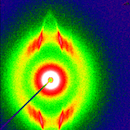
Molecular bottlebrushes are branched polymers with very high graft density which results in very rigid backbones. This conformation provides unique rheological properties compared to linear polymer melts. For instance, their very large entanglement molecular weight (Me) results in very low elastic modulus, which could be used to produce super-soft elastomers [Pakula et al., Polymer 47, 7198 (2006)]. Despite the growing interest in bottlebrush polymers, very few studies have been devoted to their linear viscoelastic response, whereas, to our knowledge, no study has been reported on their extensional rheology or their response to cold-drawing. We synthesized a series of ultra-high molecular weight (UHMW) a-olefin molecular bottlebrushes by organometallic coordinative insertion polymerization of 1-alkenes with lengths ranging from 8 to 18 carbons. The molecular weight of these polymers are in the order of a few million g/mol, which allows accurate measurement of their rubbery plateau modulus (GN0) and their Me values. The latter is an increasing function of the side chain length (Nsc) and takes values ranging from 25 kg/mol (for poly(1-octene)) to 115 kg/mol (for poly(1-octadecene)). Therefore, our bottlebrush polymers are highly-entangled and have sufficient melt strength to perform extensional rheology measurements using a commercial Sentmant extensional rheometer (SER). Bottlebrush chain alignment was measured using a novel method that combines the use of a SER with time-resolved small-angle neutron scattering (SANS) measurements [López-Barrón et al., J Rheol. 61, 697 (2017)]. The latter uses state of the art methods of neutron time stamping in the SANS detector and deconvolution protocols that yields scattering data with time resolutions of the order of seconds [López-Barrón et al., Phys. Rev. Lett. 108, 258301; Calabrese et al., Soft Matter 12, 2301 (2016)]. Those measurements were used to confirm the direct correlation between extensional stress and bottlebrush chain alignment. Complementary, in situ wide- and small-angle X-ray scattering measurements reveal that chain alignment is concomitant of self-assembly of the bottlebrush molecules into hexagonal packed cylinder (HEX) phases induced by uniaxial extension. This work reports the first direct evidence of strain-induced alignment and packing of molecular bottlebrushes and their relation with the macroscopic rheological and mechanical responses.