Speaker
Description
Small angle neutron scattering (SANS) provides unique insight into biomacromolecular complexes by combining solvent contrast variation (H2O:D2O exchange) with either natural contrast between different classes of biomolecules (proteins, RNA/DNA, lipids/detergents) and/or by applying artificial contrast, i.e. deuteration of specific biomolecules.
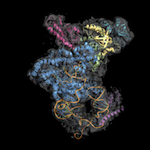
Here, I present results from different biological projects where SANS has played a crucial role by providing unique restraints for structural refinement and interpretation, complementary to other techniques (NMR, EM, crystallography).
In a first couple of examples, I will show how distance and shape restraints from SANS have helped to improve the uniqueness of structural models for two multi-protein-RNA complexes, in combination with NMR restraints and building blocks from crystallography [1, 2]. In a second example, the stoichiometry and internal topology of a highly symmetric, hetero-dodecameric aminopeptidase enzyme complex is revealed by SANS, and conclusions on the assembling process can be drawn in combination with EM data [3]. In a third example combining time-resolved (TR) SANS with online fluorescence, the active unfolding of GFP by an unfoldase could be monitored at a time resolution of 30 seconds, as well as the concomitant conformational changes of the unfoldase [4]. As a last example, I will present SANS data from a segmentally deuterated protein [5].
References
[1] Lapinaite et al. (2013) Nature 502(7472), 519-523.
[2] Hennig et al. (2014) Nature 515(7526), 287-290.
[3] Appolaire et al. (2014) Acta Cryst. D 70(Pt 11), 2983-2993.
[4] Ibrahim et al. (2017) Sci. Rep. 7, 40948.
[5] Sonntag et al. (2017) Angew. Chem. 56(32), 9322-9325.